Blog 34 : NEW Floral Botany & Dissection book!

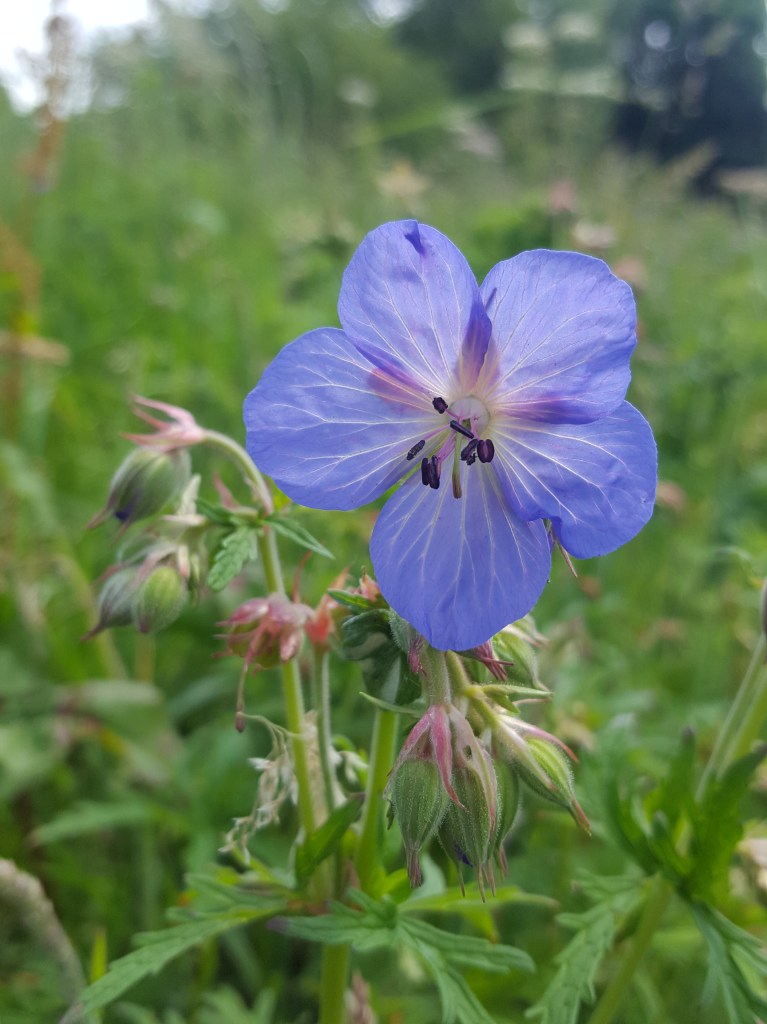
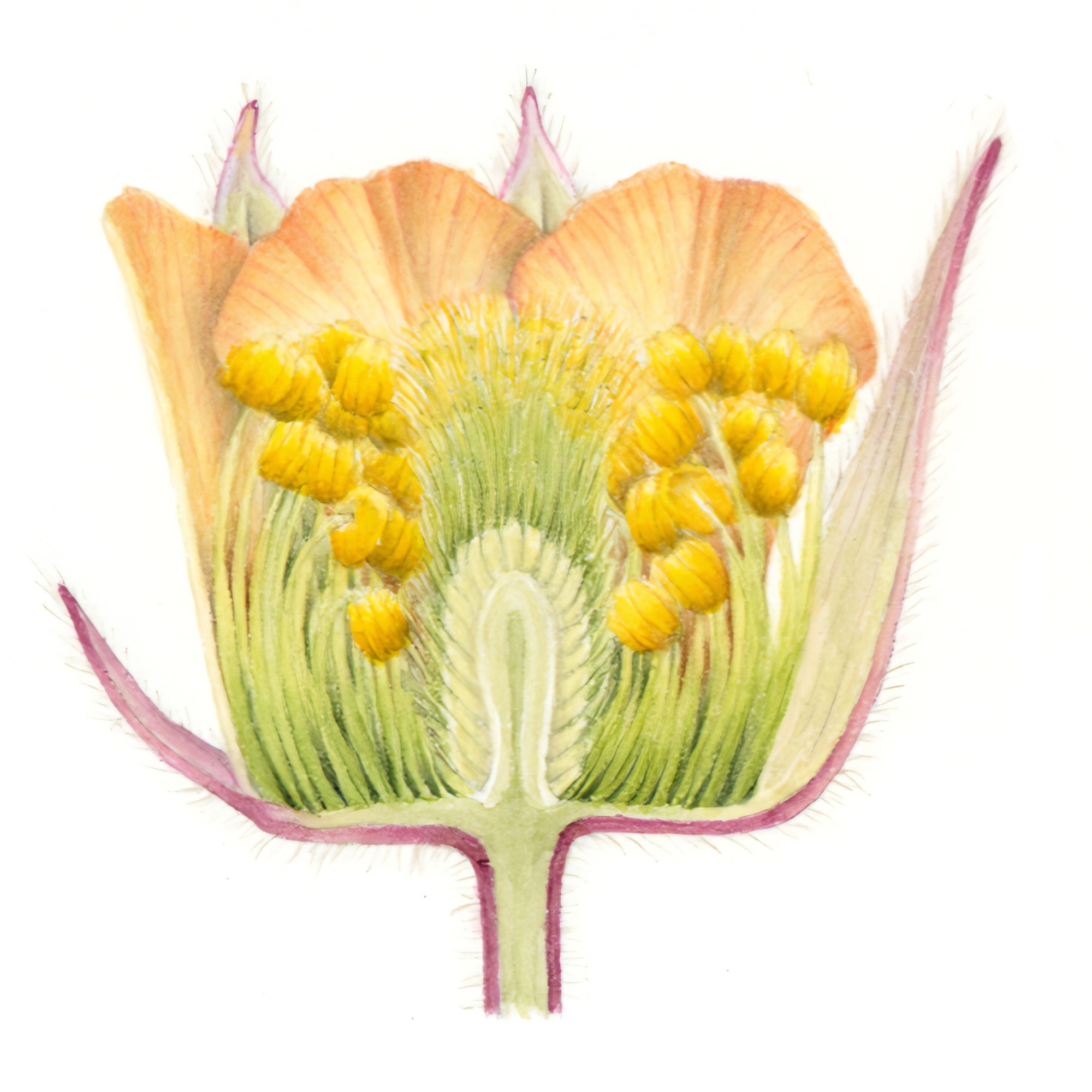
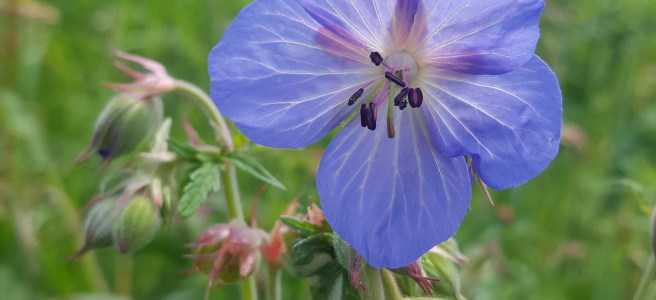
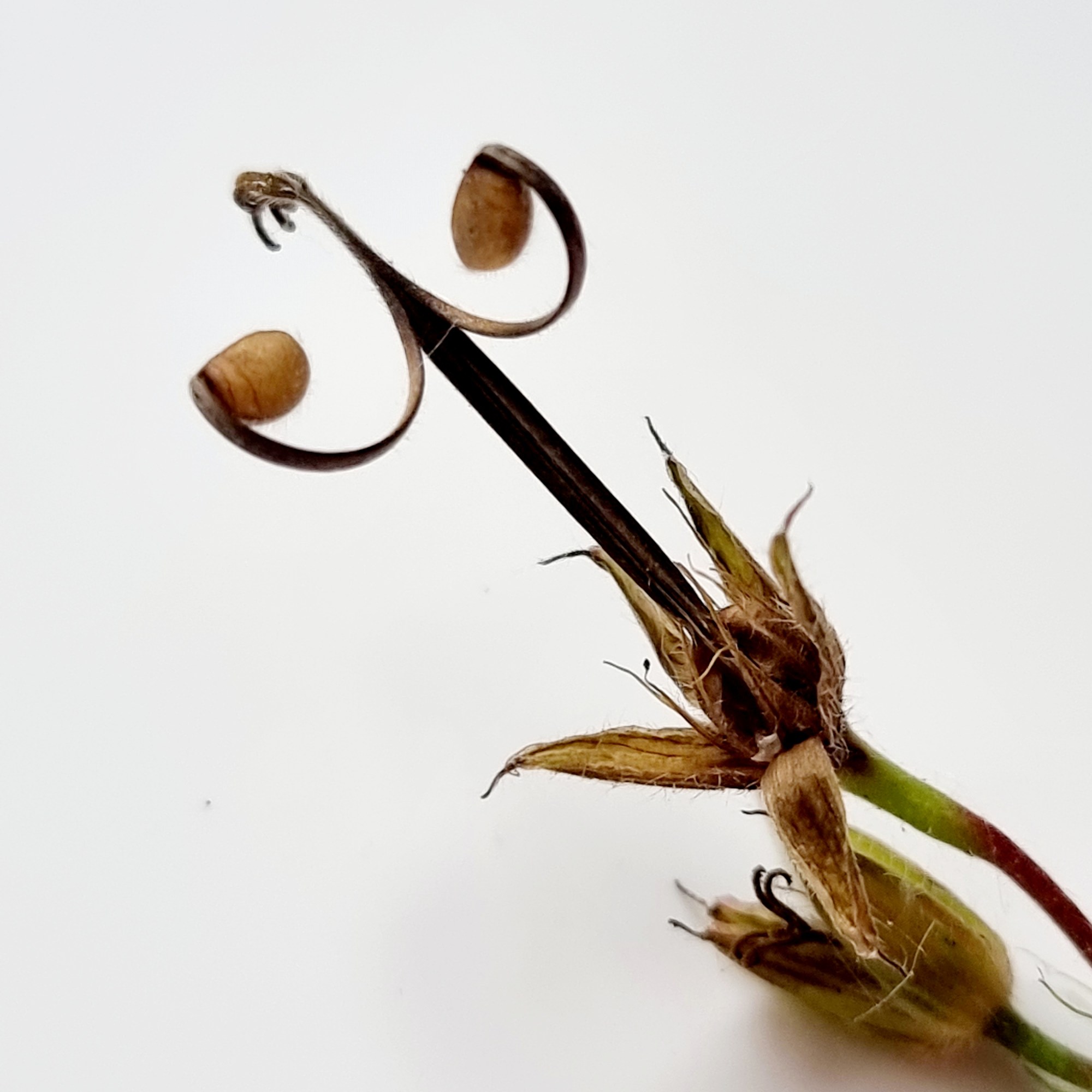
Meadow Cranesbill photo by Jackie Isard

‘Floral Botany and Dissection for Botanical Artists’ Written, designed and printed by Jackie Isard.

When I began my project work for the RHS botanical exhibition I became very interested in botany. It was important to me to paint a true likeness in accurate detail. I wanted my exhibit to look like a series of botanical plates in colour. Each painting included the plant’s lifecycle from bud to seed and because of this my research was done throughout the seasons. Once you start looking at plants, with botany in mind, you just want to know more. It’s very addictive!
I started to teach basic botany to botanical artist students soon after my RHS Gold medal award in 2022. Throughout my RHS studies I learned a great deal about plant botany. I couldn’t have done it without having a professional botanist to hand to check my drawings. It became clear to me that botanical artists really needed to know a little botany in order to understand the plant they were painting. This knowledge helps the artist to make a more accurate and detailed painting. At my basic botany workshops many students would tell me how much their eyes had been opened. It was enlightening for everyone. Knowing a little botany allows you to see or understand important plant details that are typically hidden, distant or unnoticed. Until you start looking more carefully, you really don’t see all the curious and interesting features of a plant!

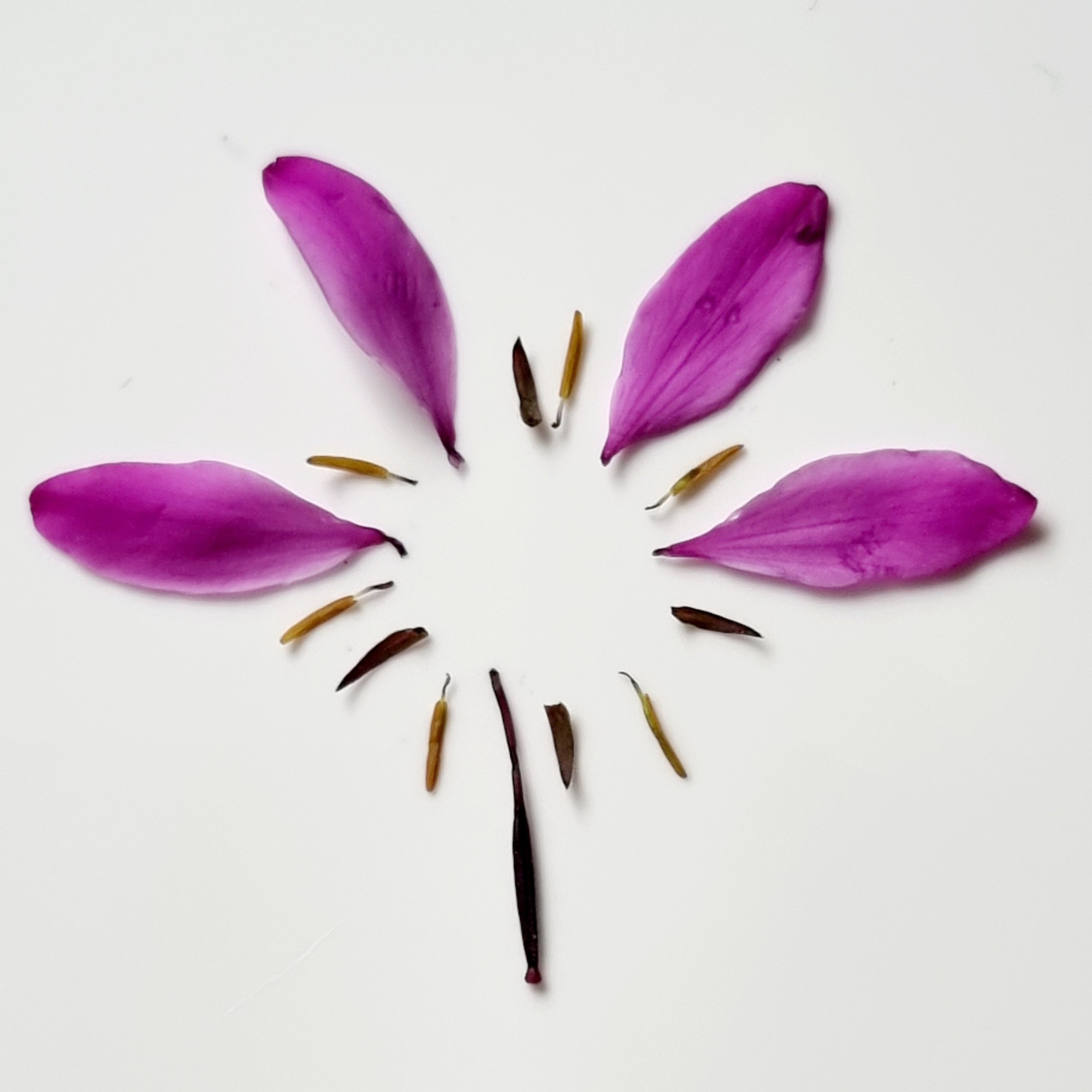
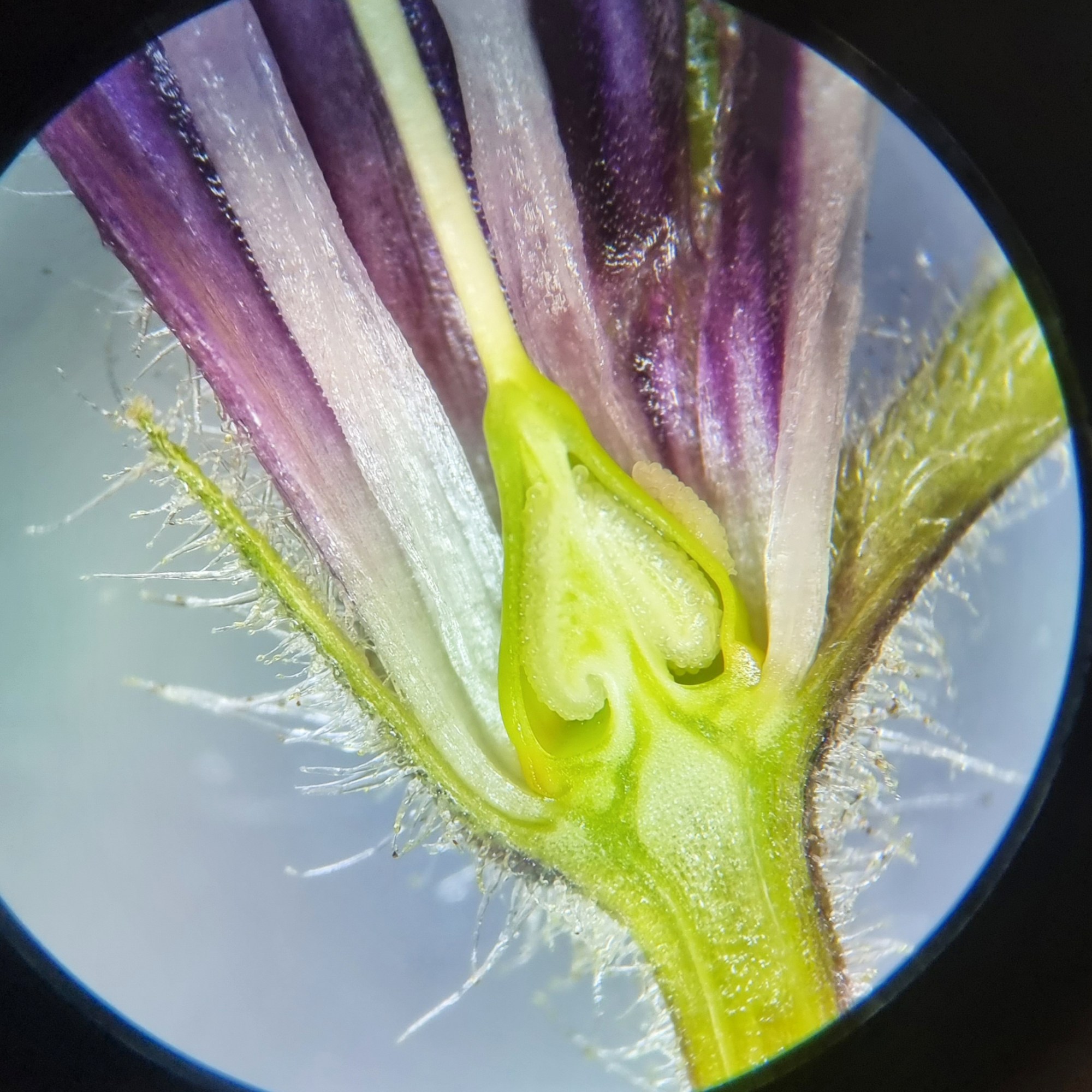
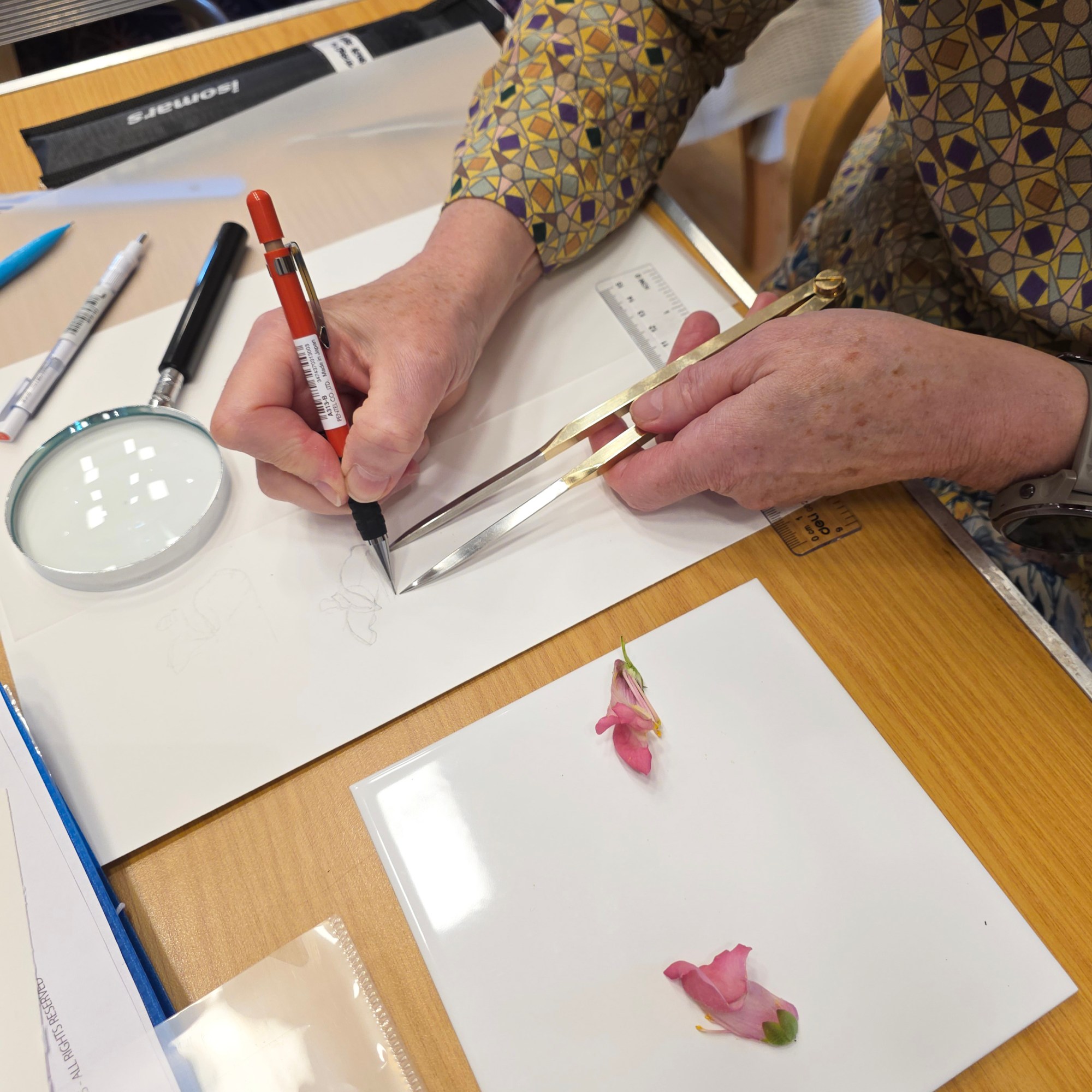
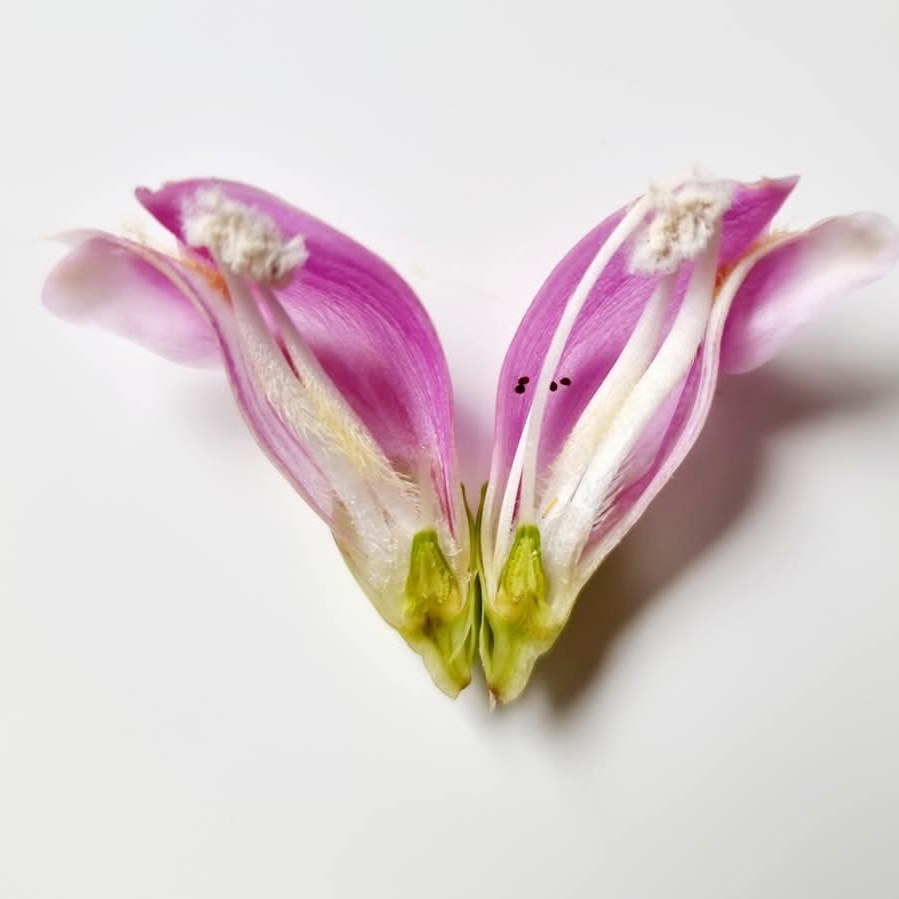
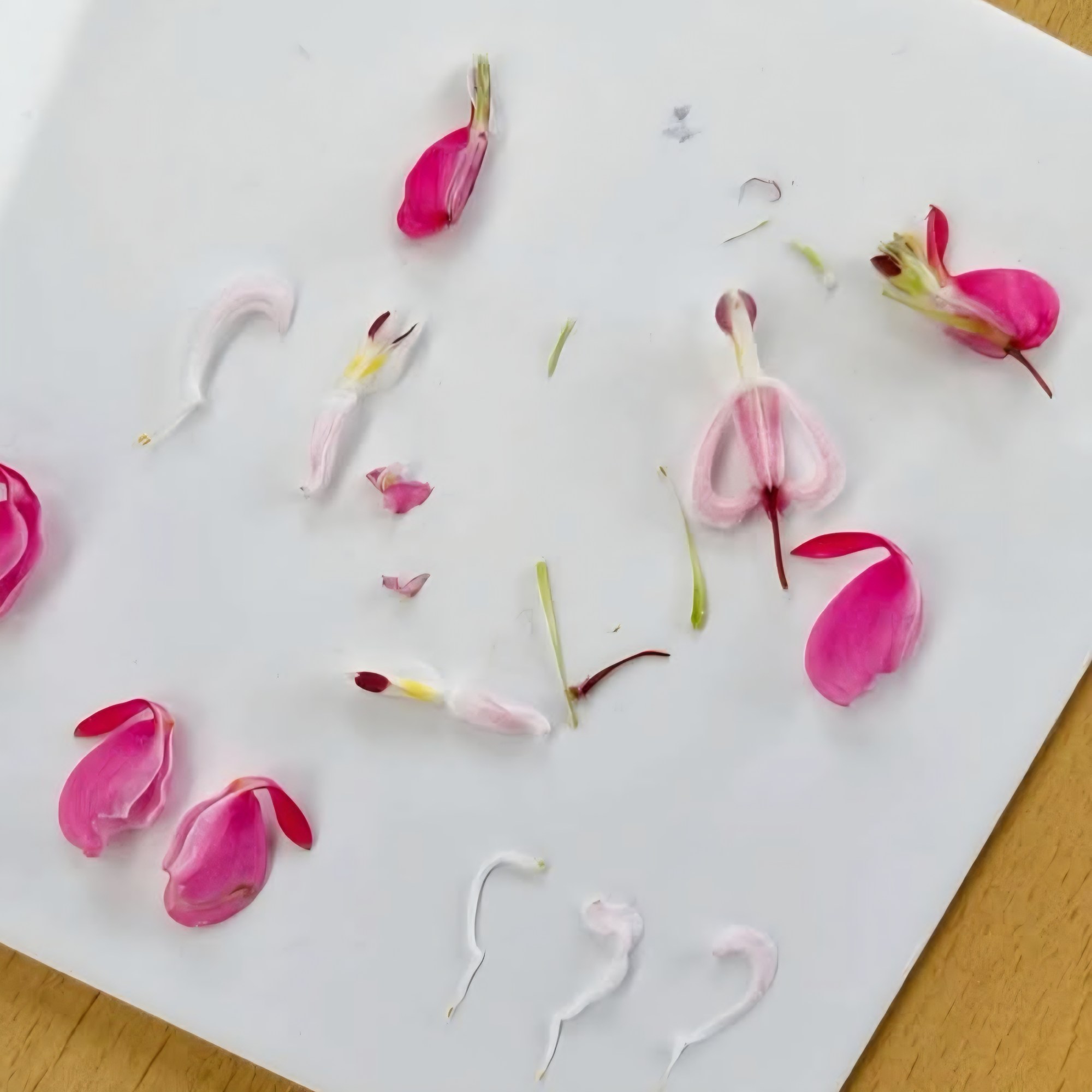
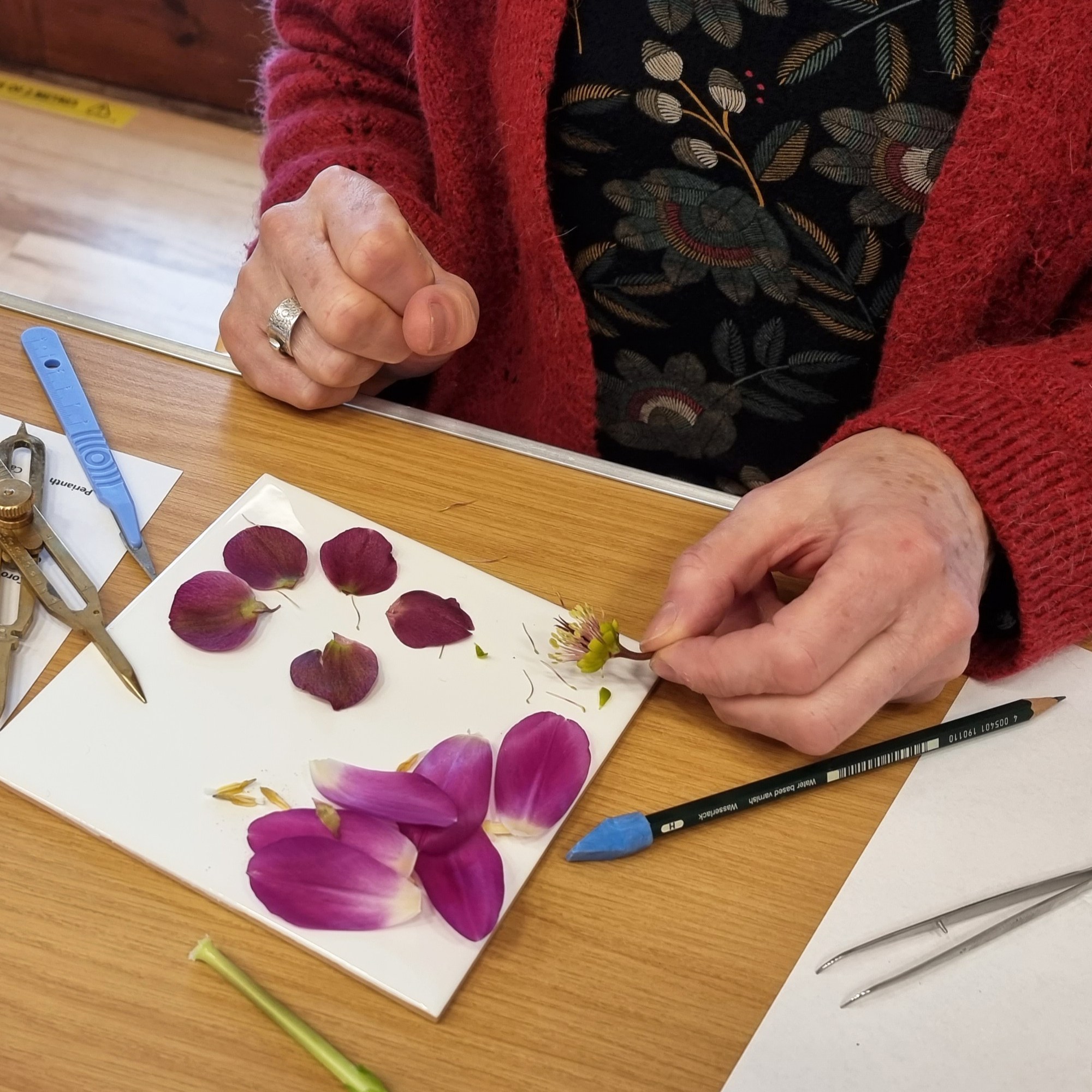
Later, whilst looking at the course notes for my basic botany workshop, I thought about writing a basic botany book. This was too vast a subject and as I am not a trained botanist, I decided to focus on one of my favourite parts, floral botany and dissection. With my professional botanist at hand, I finally made it to the finishing post and created the book you may well be holding in your hands soon. This tutorial book will teach you a great deal about flower botany and give you an understanding of how to draw a flower dissection accurately and in detail. It is packed full of information with plenty of illustrated diagrams and photos. There is also a reference section at the back on flower botany and terms.
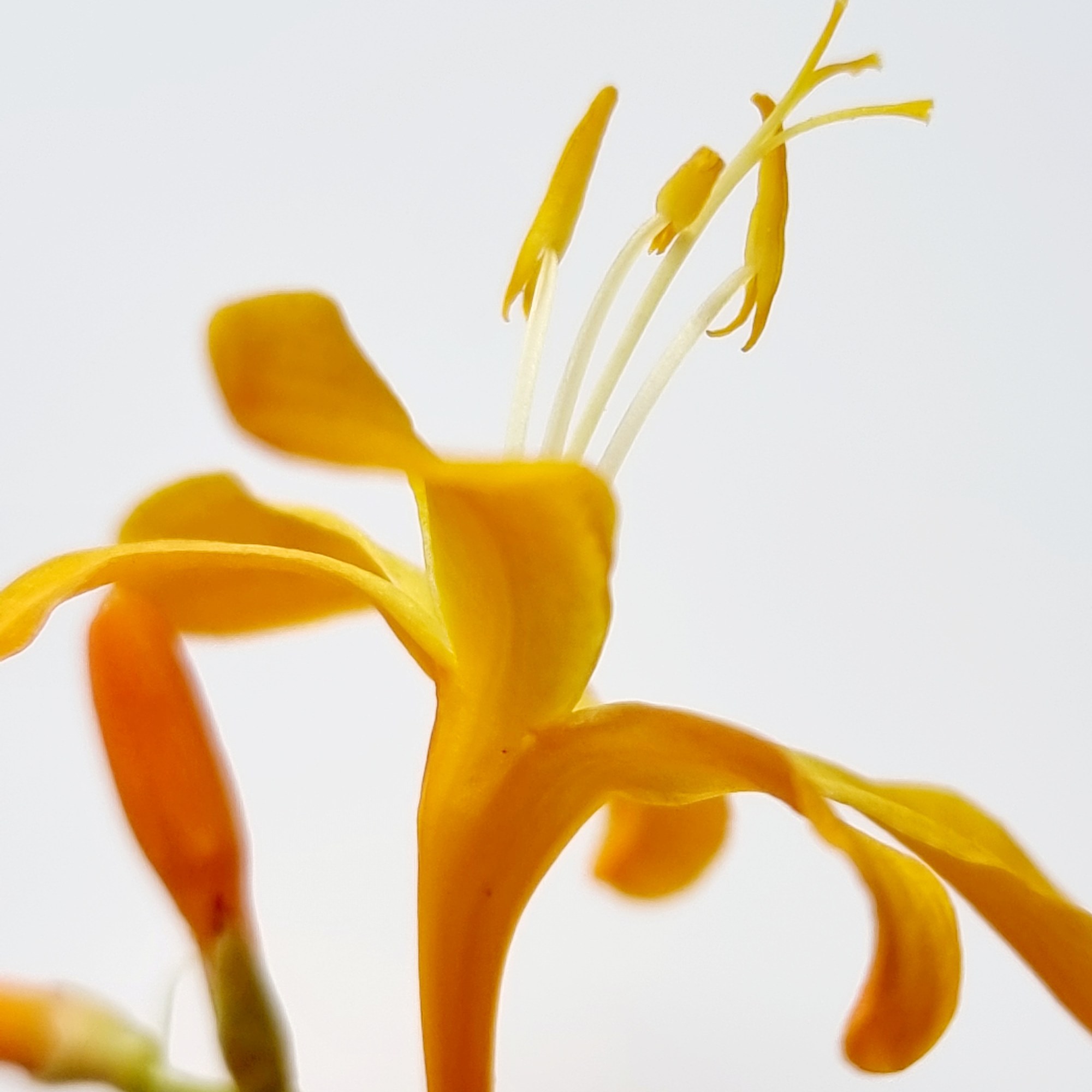
What’s in my book

•  Learn about the different parts of a flower.

•  Learn how to draw a flower dissection to a measured scale.

•  Follow a detailed step-by-step Fuchsia flower dissection. 

•  Explore other more complex flower dissection examples.

•  Examples of flowers with unusual botanical features.

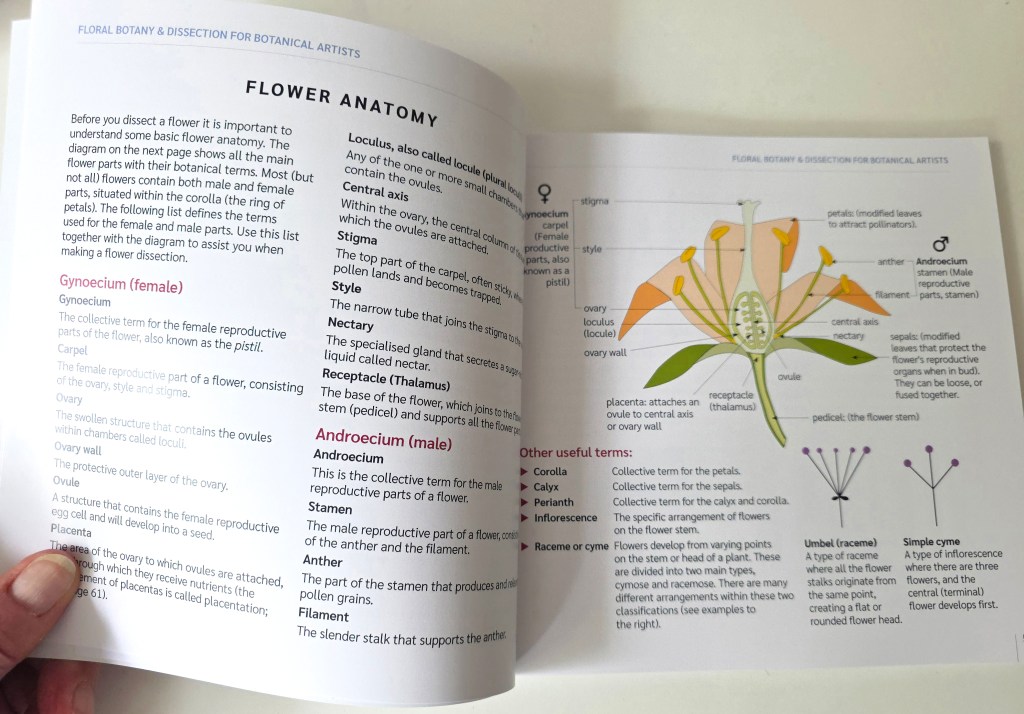
•  In-depth floral botany section to help you understand the detailed botanical features of flowers.

•  Learn how to draw scale bars.

•  Understand plant naming and nomenclature.

Here are some internal page images. The book has 86 pages and is 20cm x 20cm in size. A nice size to carry around without being too cumbersome.
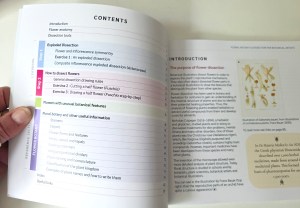
The book…
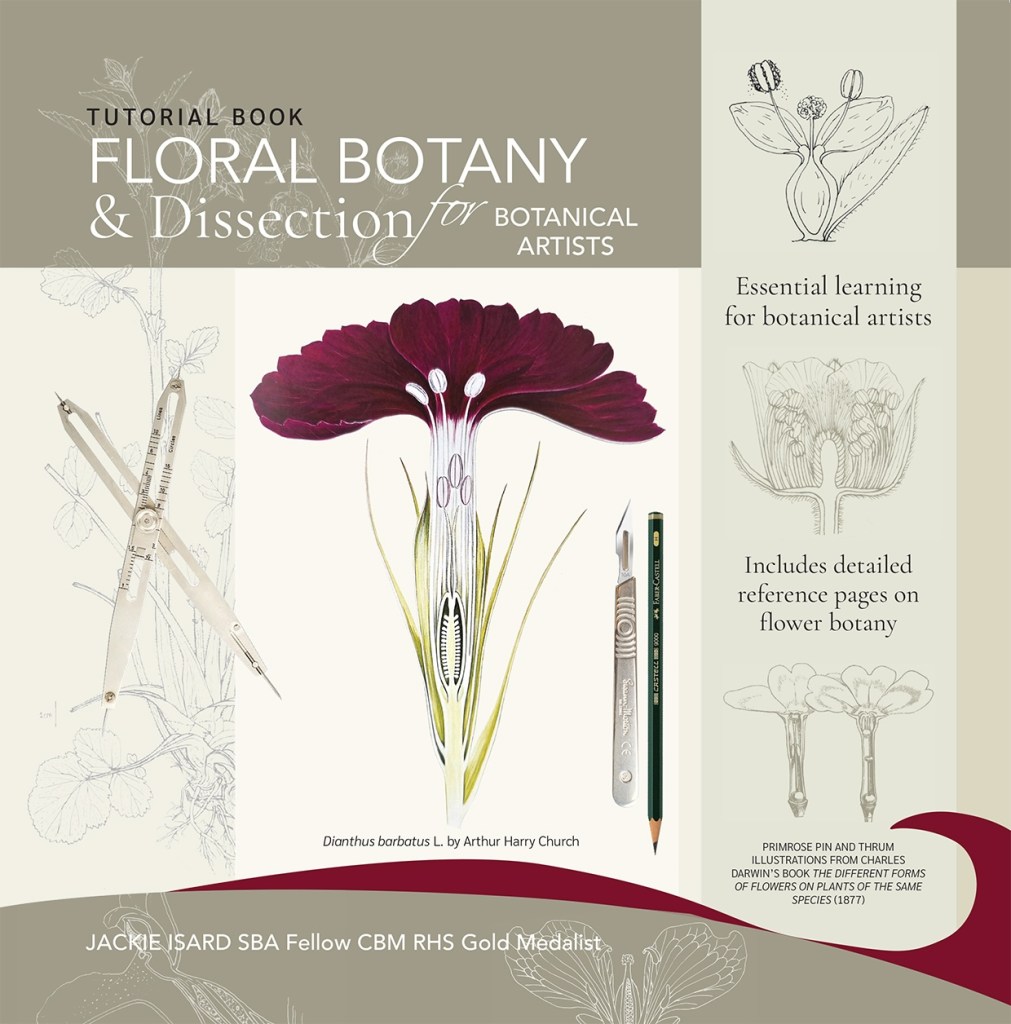
£18 + postage (UK and worldwide)
Written, designed and printed by Jackie Isard

Please note: This book is only available to botanical students and botanical artists/tutors worldwide (it is an educational book and is not for sale in the public domain).
Email me to buy: jackieisard@googlemail.com

I hope you find the read enjoyable and do please pass your knowledge on to your students and other botanical artists.

If you do buy the book I would love to hear your feedback, thank you!
Blog 25 : Colour matters

Colours with the same name – don’t be fooled!

A little bit of advice today. Never rely on one manufacturers pigment being exactly the same as another brand, even if it has the same name.

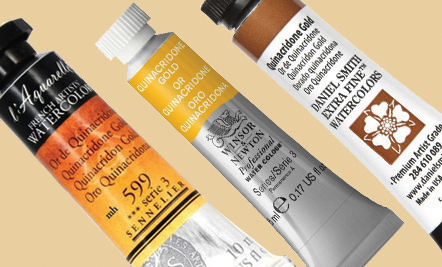
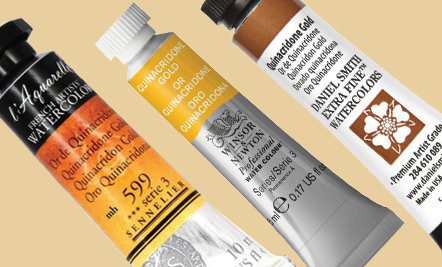
Quinacridone Gold is one example of this anomaly. Winsor & Newton Quinacridone Gold is made with index numbers PY150, PR206 and PV19 but the Sennelier version uses PY150, PR206 and PR101 and Daniel Smith, to further confuse, is made with PY150 and PO48. All three brands will look different when painted due to this.

Quin Golds by Sennelier, Winsor & Newton and Daniel Smith

All brands have the bright PY150  yellow pigment. This is the same pigment used in Transparent Yellow. The Winsor & Newton version is definitely a more muted colour than the Sennelier version and the Daniel Smith one is quite different again. 

Let’s look at the colour index numbers first. These are the index numbers for all three brands. Winsor & Newton: PY150 is a bright yellow, PV19 is a cool magenta, PR206 is a red/brown. Sennelier: PY150 and PR101 a reddish terracotta, a little like Burnt Sienna. Daniel Smith: PY150 and PO48 a burnt orange. 

Here is an analogy of the index numbers within these three pigments.

Winsor & Newton: PY150 (yellow) + PR206 (red/brown) + PV19 (cool magenta like Permanent Rose and Permanent Magenta) – the spike of magenta makes this version more muted because PV19 is cool and very near to the violet/blue spectrum. When red/brown, yellow and the violet biased magenta are mixed we get a golden beige/brown. The magenta makes this mix a more muted gold with a slight brown bias.

Sennelier: PY150 (yellow) + PR206 (red/brown) + PR101 (terracotta/burnt sienna) – the warmth of this mix is due to red index colours being of the same warmth and bias. It is only slightly muted and more golden than the Winsor & Newton version as there is no violet or cool bias.

Daniel Smith: This version of Quinacridone Gold is made with PO48 and PY150. PO48 is a burnt orange tone. This is a warm and brighter version due to no violet or red/brown influence. 

Quinacridone Gold is a colour which sings out in this autumn subjects like this magnolia leaf below!

So when you are selecting new pigments, always check the index numbers. Single index numbers are best for mixing but occasionally you will find a colour with two or even three, like Quinacridone Gold. When mixing with pigments of more than one index number, be aware not to add too many other pigments to it. A maximum of three index numbers mixed together are best for vibrance. Quinacridone Gold is already a muted colour by having three index numbers, so adding more index numbers to it will just mute it even further to brown.

For everything you need to know about colour mixing theory and application techniques see my book below which will be available to purchase next year in March 2021.

Until then, happy painting!


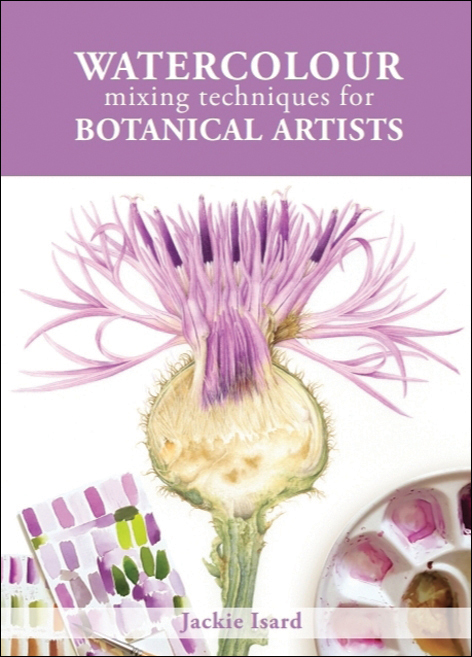
Watercolour Mixing Techniques for Botanical Artists

Published by The Crowood Press

A practical guide to accurate watercolour mixing with primaries for botanical artists
Colour mixing is a key skill for the botanical artist. In this practical guide, Jackie Isard explains how to observe and use colour accurately. She shows artists how to make informed choices when selecting pigments, as well as how to learn about colour mixing and its application.
• Gives detailed instruction and advice on understanding colour and pigments
• Explains how to ‘see’ colour and tricky mixes, from greens and reds to the difficult botanical greys
• Includes advanced colour application techniques – colour enhancement, shadow colours and colour temperature transition
• Step-by-step guides illustrate how to paint with layers, how to use underlaying colours to enhance, and colour and fine detailing

Order online via book shops or Amazon. More information on how to buy is on my website www.jibotanicals.co.uk. Please note, preorders for USA and Canada are available online. Launch in the states is October 2021. E-books are also available.


Online courses for botanical artists:
•  Mixing Watercolour Accurately for Botanical
•  Fine Details and Finishing Techniques
For more information and course outlines see my website at:
www.jibotanicals.co.uk


NEW MINI-BOOK for beginner botanical artists being launched soon. Order from me direct when it is announced on Facebook or via email if you have joined my website mail-list www.jibotanicals.co.uk. Please note, no preorders are being taken at present.

The Little Book of Watercolour
for Beginner Botanical Artists

A very useful little guide for beginner botanical artists wishing to learn how to use watercolour and their painting materials.
• Water and pigment balance 
• Brush types and uses 
• Using a palette
• Exercises to improve brush skills 
• Useful painting techniques

This self published mini-book is available to purchase. See the preview flip through blog here on my blog. Please contact me personally to buy, jackieisard@jibotanicals


Email address:jackieisard@googlemail.com
Facebook:https://www.facebook.com/jackieisardbotanicalnaturepainting/
Instagram: @jackieisard
Blog: https://jibotanicals.com/
Web: https://www.jibotanicals.co.uk/
Etsy shop: https://www.etsy.com/uk/shop/jibotanicalsGifts