Colours with the same name – don’t be fooled!
A little bit of advice today. Never rely on one manufacturers pigment being exactly the same as another brand, even if it has the same name.
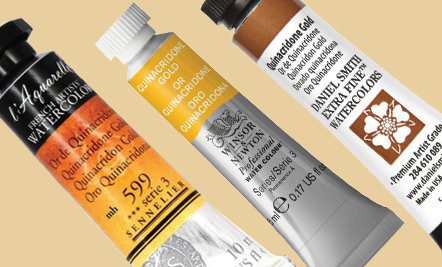
Quinacridone Gold is one example of this anomaly. Winsor & Newton Quinacridone Gold is made with index numbers PY150, PR206 and PV19 but the Sennelier version uses PY150, PR206 and PR101 and Daniel Smith, to further confuse, is made with PY150 and PO48. All three brands will look different when painted due to this.
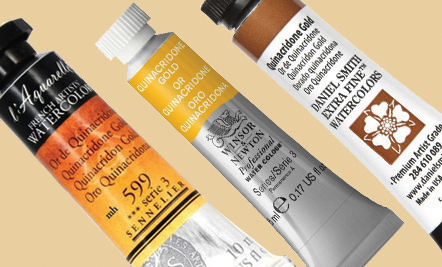
All brands have the bright PY150 yellow pigment. This is the same pigment used in Transparent Yellow. The Winsor & Newton version is definitely a more muted colour than the Sennelier version and the Daniel Smith one is quite different again.
Let’s look at the colour index numbers first. These are the index numbers for all three brands. Winsor & Newton: PY150 is a bright yellow, PV19 is a cool magenta, PR206 is a red/brown. Sennelier: PY150 and PR101 a reddish terracotta, a little like Burnt Sienna. Daniel Smith: PY150 and PO48 a burnt orange.
Here is an analogy of the index numbers within these three pigments.
Winsor & Newton: PY150 (yellow) + PR206 (red/brown) + PV19 (cool magenta like Permanent Rose and Permanent Magenta) – the spike of magenta makes this version more muted because PV19 is cool and very near to the violet/blue spectrum. When red/brown, yellow and the violet biased magenta are mixed we get a golden beige/brown. The magenta makes this mix a more muted gold with a slight brown bias.
Sennelier: PY150 (yellow) + PR206 (red/brown) + PR101 (terracotta/burnt sienna) – the warmth of this mix is due to red index colours being of the same warmth and bias. It is only slightly muted and more golden than the Winsor & Newton version as there is no violet or cool bias.
Daniel Smith: This version of Quinacridone Gold is made with PO48 and PY150. PO48 is a burnt orange tone. This is a warm and brighter version due to no violet or red/brown influence.
Quinacridone Gold is a colour which sings out in this autumn subjects like this magnolia leaf below!

So when you are selecting new pigments, always check the index numbers. Single index numbers are best for mixing but occasionally you will find a colour with two or even three, like Quinacridone Gold. When mixing with pigments of more than one index number, be aware not to add too many other pigments to it. A maximum of three index numbers mixed together are best for vibrance. Quinacridone Gold is already a muted colour by having three index numbers, so adding more index numbers to it will just mute it even further to brown.
For everything you need to know about colour mixing theory and application techniques see my book below which will be available to purchase next year in March 2021.
Until then, happy painting!
Watercolour Mixing Techniques for Botanical Artists
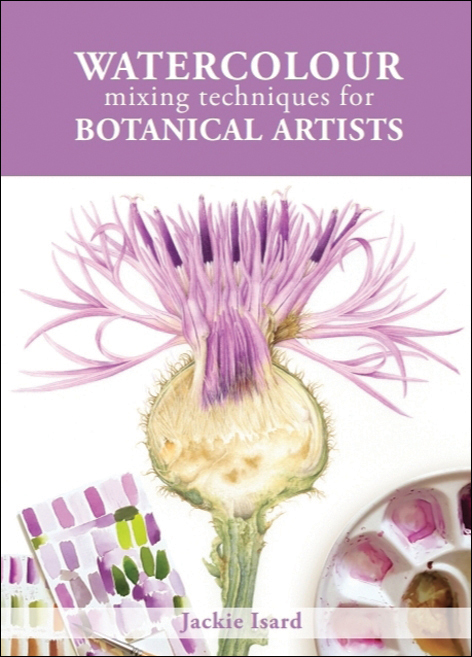
A practical guide to accurate watercolour mixing with primaries for botanical artists
Colour mixing is a key skill for the botanical artist. In this practical guide, Jackie Isard explains how to observe and use colour accurately. She shows artists how to make informed choices when selecting pigments, as well as how to learn about colour mixing and its application.
• Gives detailed instruction and advice on understanding colour and pigments
• Explains how to ‘see’ colour and tricky mixes, from greens and reds to the difficult botanical greys
• Includes advanced colour application techniques – colour enhancement, shadow colours and colour temperature transition
• Step-by-step guides illustrate how to paint with layers, how to use underlaying colours to enhance, and colour and fine detailing
Order online via book shops or Amazon. More information on how to buy is on my website www.jibotanicals.co.uk. Please note, preorders for USA and Canada are available online. Launch in the states is October 2021. E-books are also available.
Online courses for botanical artists:
• Mixing Watercolour Accurately for Botanical
• Fine Details and Finishing Techniques
For more information and course outlines see my website at:
www.jibotanicals.co.uk
NEW MINI-BOOK for beginner botanical artists being launched soon. Order from me direct when it is announced on Facebook or via email if you have joined my website mail-list www.jibotanicals.co.uk. Please note, no preorders are being taken at present.
The Little Book of Watercolour
for Beginner Botanical Artists

A very useful little guide for beginner botanical artists wishing to learn how to use watercolour and their painting materials.
• Water and pigment balance
• Brush types and uses
• Using a palette
• Exercises to improve brush skills
• Useful painting techniques
This self published mini-book is available to purchase. See the preview flip through blog here on my blog. Please contact me personally to buy, jackieisard@jibotanicals

Email address:jackieisard@googlemail.com
Facebook:https://www.facebook.com/jackieisardbotanicalnaturepainting/
Instagram: @jackieisard
Blog: https://jibotanicals.com/
Web: https://www.jibotanicals.co.uk/
Etsy shop: https://www.etsy.com/uk/shop/jibotanicalsGifts



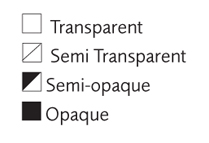 Here I have split some of the W&N blues into categories. The permanency, lightfastness and transparency ratings are under each colour:
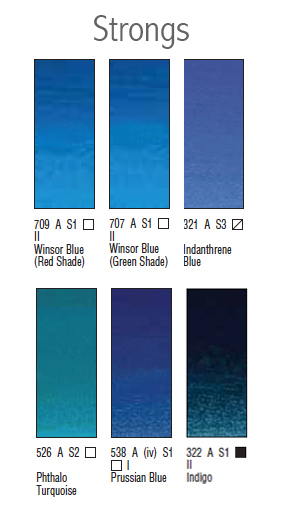 Strongs – those which have greater intensity of pigment, you’ll need less when mixing!
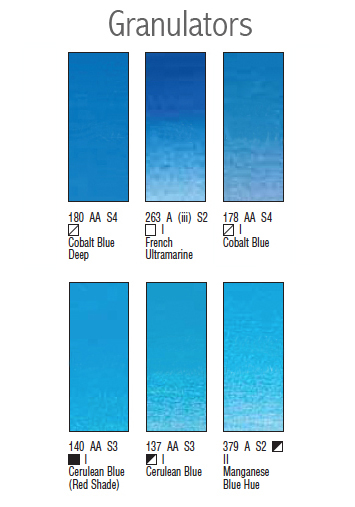 Granulators – those which granulate, not good for smooth rendering! Some of them will granulate more than others. Cobalt Blue isn’t as grainy as French Ultramarine. However, Ultramarine Green Shade shows very little granulation, but it does have a very slight green bias compared to French Ultramarine. I like the intensity of this pigment compared to French Ultramarine though.
Cerulean is a particularly granulating pigment and semi-opaque. If used as an underlayer, you will not achieve a smooth see-through effect with it. It is good for textured style painting though. See the image below for a comparison. Hopefully you can see it as this was quite hard to photograph! The difference is more obvious in real life. Try it out and see for yourself.
Granulators – those which granulate, not good for smooth rendering! Some of them will granulate more than others. Cobalt Blue isn’t as grainy as French Ultramarine. However, Ultramarine Green Shade shows very little granulation, but it does have a very slight green bias compared to French Ultramarine. I like the intensity of this pigment compared to French Ultramarine though.
Cerulean is a particularly granulating pigment and semi-opaque. If used as an underlayer, you will not achieve a smooth see-through effect with it. It is good for textured style painting though. See the image below for a comparison. Hopefully you can see it as this was quite hard to photograph! The difference is more obvious in real life. Try it out and see for yourself.
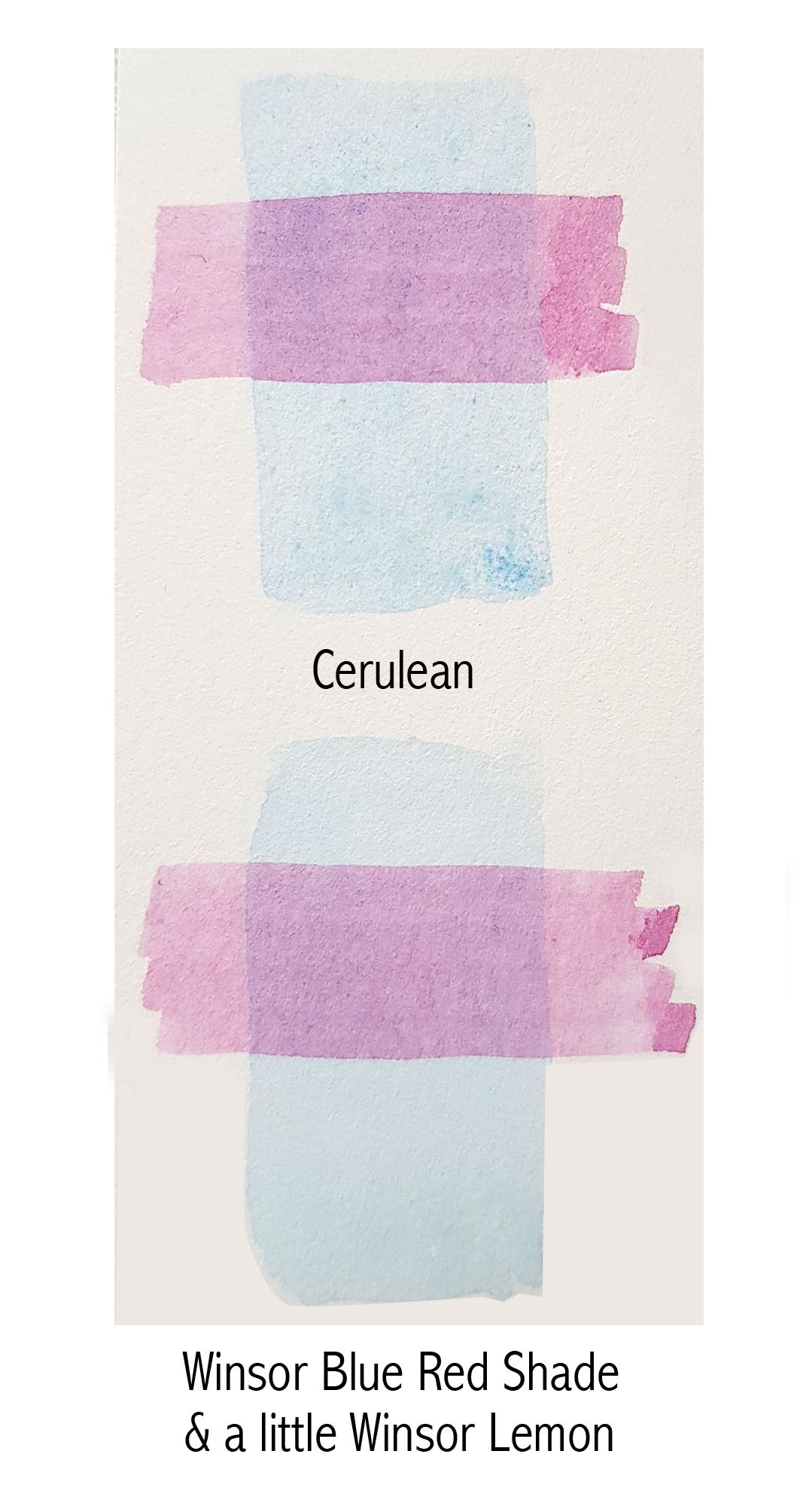 As seen above, a purple overlay was painted over base layers of Cerulean and Winsor Blue (Red Shade). The purple mix overlaid is a transparent mix. As you will see in the Cerulean example, it appears less crisp and quite mottled by the granulation. It also looks a little flatter where transparency is concerned. The Winsor Blue (Red Shade) underlay appears crisper and more see-through. So, if you are looking for a lighter blue underlay but with a slight yellow bias, just add a teensy bit of Winsor Lemon to Winsor Blue (Red Shade) and you will have a lovely smooth Cerulean look-alike!
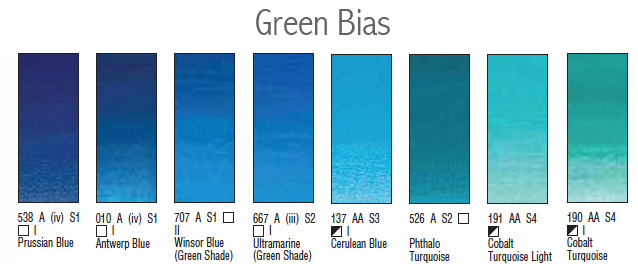 Green bias – those which will cool a mix or are more green in appearance. Further along the image above are the very green bias blues, turquoise. The greener a blue is, the more vivid it will be when mixing greens. It will need to be tamed by adding a tiny bit of red to make a more natural mix. Add Quinacridone Red (QR) to Phthalo Turquoise (PT) and you will make a muted purple/mauve/burgundy because of the green bias. Add QR to Ultramarine Green Shade (UGS), a less green biased blue, and you will make brighter purple and mauve. This is because the green bias adds more yellow to the mix muting it down. Yellow and blue make green (green/blue), plus red makes brown!
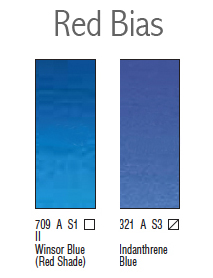 Red bias – those which will add warmth a mix. Add Transparent Yellow to a red bias blue and you will make more natural greens. Add it to Winsor Blue (Green Shade), a green bias blue, and you will make vibrant but less natural emerald greens. Red will need to be added to tame these mixes.
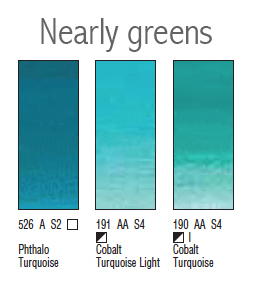 Nearly greens – those which have a definite green bias. You will notice above that Cobalt Turquoise and Cobalt Turquoise Light are semi-opaque. They also granulate. I would only use these for textured, looser style painting.
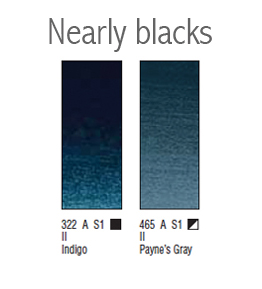 Nearly blacks – those blues which are very dark pigments with a blue bias. Notice also that both Indigo and Payne’s Grey are opaque and semi-opaque. These pigments contain black which gives them their opacity. Both have the same colour index numbers – PB15 • PBk6 • PV19 but in different proportions. The black colour index will make a mix dense and flat looking. These pigments are only useful in extremely dark areas although darkening a mix is much better using transparent or semi-transparent primaries. If done this way, it will still have a see-through feel despite being almost black.
My underlay blue choices
My favourite blues for underlaying are Winsor Blue (Red Shade), French Ultramarine and Cobalt Blue. Winsor Blue (Red Shade) is particularly good when watered down as it is really smooth. It is a lovely bright red biased blue. Make sure you paint it on very pale though as it is one of the stronger pigments. It is also one of my favourite blues to mix with. French Ultramarine, although it granulates, when used very thinly it adds a nice coolness. It is a blue with little to no bias. It is great for edging highlights on dark coloured leaves like holly. Cobalt is a lighter blue which also granulates a little. Again, used thinly, it adds a nice coolness to the layers above.
Well that’s it for this month! If you like, please do message me with any suggestions of which colours you’d like to discuss next.
Until the 24th of next month, I hope you all have a great August. Maybe even have a break and be able to spend a few days away from home!
Nearly blacks – those blues which are very dark pigments with a blue bias. Notice also that both Indigo and Payne’s Grey are opaque and semi-opaque. These pigments contain black which gives them their opacity. Both have the same colour index numbers – PB15 • PBk6 • PV19 but in different proportions. The black colour index will make a mix dense and flat looking. These pigments are only useful in extremely dark areas although darkening a mix is much better using transparent or semi-transparent primaries. If done this way, it will still have a see-through feel despite being almost black.
My underlay blue choices
My favourite blues for underlaying are Winsor Blue (Red Shade), French Ultramarine and Cobalt Blue. Winsor Blue (Red Shade) is particularly good when watered down as it is really smooth. It is a lovely bright red biased blue. Make sure you paint it on very pale though as it is one of the stronger pigments. It is also one of my favourite blues to mix with. French Ultramarine, although it granulates, when used very thinly it adds a nice coolness. It is a blue with little to no bias. It is great for edging highlights on dark coloured leaves like holly. Cobalt is a lighter blue which also granulates a little. Again, used thinly, it adds a nice coolness to the layers above.
Well that’s it for this month! If you like, please do message me with any suggestions of which colours you’d like to discuss next.
Until the 24th of next month, I hope you all have a great August. Maybe even have a break and be able to spend a few days away from home!


 jibotanicals